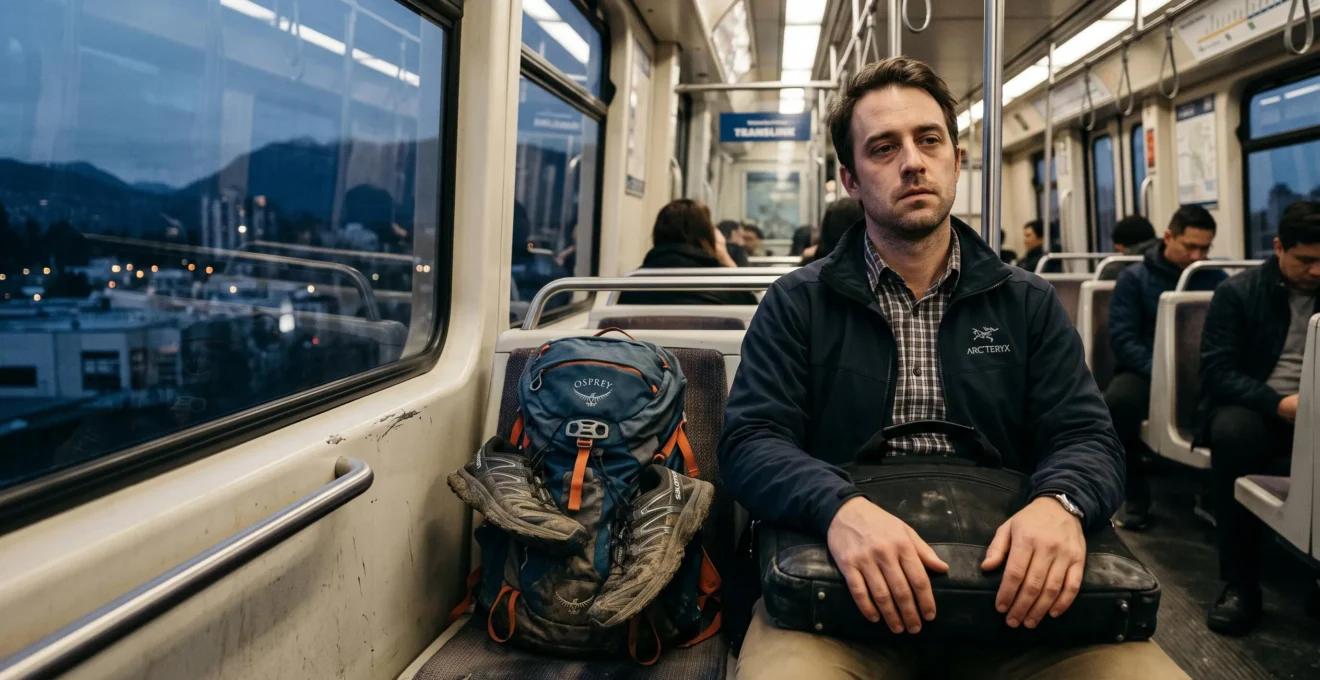
A Vancouver job promising flexible hours, mountain access and a healthy lifestyle can still leave you exhausted three months after starting. The problem is rarely the absence of attractive benefits. More often, daily workload, unclear availability expectations and commuting demands gradually consume the time those benefits were supposed to protect.
The first 90 days are a useful checkpoint, not a scientifically established burnout deadline. During onboarding, professionals may accept extra meetings, late messages and constantly changing priorities to demonstrate commitment. Once these exceptions become routine, flexible working arrangements can feel considerably less flexible.
Vancouver’s housing costs and geography add practical constraints. An employee commuting across Metro Vancouver may have limited evenings even without overtime, while someone working remotely may struggle to switch off in a small shared home.
Protecting work-life balance requires separating three questions: whether the workload is sustainable, whether boundaries are respected, and whether time away from work genuinely restores energy. Outdoor recreation can support recovery, but it cannot replace adjustments to an overloaded job.
Vancouver work-life balance: the essential points
- Persistent exhaustion, cynicism and reduced effectiveness deserve attention even when weekends remain active and enjoyable.
- Track working hours, commuting, after-hours demands and competing priorities before negotiating workload or hybrid arrangements.
- Use outdoor breaks for recovery, but address unreasonable expectations directly rather than relying on wellness perks to compensate for them.
- Why Does Vancouver’s Outdoor Lifestyle Make Burnout Harder to Notice Until It’s Severe?
- How to Set Boundaries at a Vancouver Job Using 4 Scripts That Don’t Sound Aggressive?
- Hybrid or Fully Remote: Which Vancouver Work Setup Improves Your Week When You Commute 60 Minutes?
- The Perk Trap That Makes Vancouver Employees Accept ‘Wellness’ While Workload Stays Toxic
- When Should You Raise Workload Issues in a Vancouver Company to Avoid Career Damage?
- Why Does Hybrid Work Create Visibility Anxiety in Vancouver Teams?
- Why Does Mountain Time Recover Vancouver Workers Faster Than Staying ‘Offline’ at Home?
- How Can Vancouver’s Coastal Mountains Reduce Work Stress Without Taking Full Days Off?
Why Does Vancouver’s Outdoor Lifestyle Make Burnout Harder to Notice Until It’s Severe?
Vancouver’s outdoor lifestyle can make workplace burnout harder to recognize when enjoyable activities disguise persistent exhaustion. After a demanding week, someone may attribute feeling drained to hiking or skiing rather than examining their workload. The distinction becomes clearer when fatigue persists after rest, enjoyment declines or attitudes toward work noticeably deteriorate.
A Saturday on the North Shore and a Sunday paddle can provide genuine satisfaction. Yet an active weekend does not necessarily erase five days of unmanaged workplace stress. This creates a possible recovery-masking effect: physical activity becomes the most visible explanation for tiredness, while occupational strain receives less scrutiny.
The World Health Organization‘s ICD-11 explanation of burnout identifies three dimensions: energy depletion or exhaustion, growing mental distance or cynicism toward work, and reduced professional efficacy. Burnout is classified as an occupational phenomenon, not a medical condition. Outdoor fatigue alone does not establish it.
Consider two patterns during a weekly personal check:
- Activity-related tiredness: muscle soreness follows exercise, ordinary sleep and recovery help, and anticipation of the next outing remains positive.
- Possible workplace-related depletion: exhaustion continues through rest days, Sunday evenings bring persistent dread, routine decisions feel difficult, or formerly enjoyable activities lose their appeal.
Neither pattern is a diagnostic test. Persistent fatigue can have other physical or psychological explanations and may warrant professional assessment.
Social expectations can further complicate recognition. In an outdoor-oriented professional circle, sharing adventurous weekends may feel rewarding while creating pressure to appear energetic. A person posting summit photos may still be struggling with concentration at work on Monday.
Early changes worth recording include increasing caffeine consumption to manage familiar tasks, cancelling recreational plans simply to recover, and becoming unusually irritable during minor workplace interactions. These are nonspecific signals, but their persistence may justify examining work conditions.
Recognizing the pattern is only the starting point. The next step is preventing repeated workplace demands from consuming the recovery time you need.
How to Set Boundaries at a Vancouver Job Using 4 Scripts That Don’t Sound Aggressive?
Effective workplace boundaries identify your available capacity, explain competing priorities and offer a practical next step without sounding confrontational. Four scripts cover common situations: unexpected evening requests, weekend availability, expanding project scope and unrealistic deadlines. Their purpose is to make expectations explicit while preserving collaboration, rather than apologizing for reasonable limits.
Professional relationships can overlap across Vancouver’s technology, creative and nonprofit communities. That makes respectful communication useful, although the size of a local network does not mean workers must accept excessive demands. Clear prioritization protects both delivery quality and working relationships.
Here are four scripts you can adapt directly:
- Last-minute after-hours request: “I can pick this up tomorrow morning. If it needs attention tonight, which existing priority should move?”
- Weekend message expectations: “I review non-urgent messages during working hours. For a genuine weekend emergency, can we agree on an escalation process and who is covering it?”
- Scope creep during meetings: “That additional requirement changes the effort involved. Which current deliverable should we reduce or defer to accommodate it?”
- Deadline extension: “Based on the remaining tasks and current capacity, the original deadline is at risk. I can deliver the core requirements first or complete the full scope by a revised date. Which option is more useful?”
Each script offers a concrete decision. Instead of positioning the employee as unwilling, it asks the manager to reconcile the workload with available time.
After a boundary conversation, send a brief reaffirmation message: “Confirming our discussion, I’ll complete the reporting task by Thursday, and the additional analysis moves to next week.” Written confirmation reduces the chance that either person remembers the agreement differently.
Boundaries also need an exception policy. Decide in advance which situations genuinely justify additional availability, such as a pre-agreed critical incident or a time-sensitive handoff. When requests repeatedly fall outside these categories, reuse the same capacity-based language rather than silently absorbing them.
British Columbia’s employment standards provide another consideration. The British Columbia government‘s overtime pay rules generally address work beyond eight hours daily or forty hours weekly, but eligibility varies. Managers, certain high-technology employees and other categories may be subject to exceptions or different arrangements. Salary status alone does not determine entitlement.
A boundary is meaningful when it changes how work is assigned or scheduled. Once availability is clearer, commuting and workplace attendance become the next major variables.
Hybrid or Fully Remote: Which Vancouver Work Setup Improves Your Week When You Commute 60 Minutes?
For a Vancouver professional with a 60-minute one-way commute, fully remote work usually preserves more commuting time, but hybrid employment may offer valuable in-person collaboration. The better arrangement depends on predictable travel demands, meeting schedules, home working conditions and career priorities. Compare actual weekly hours and energy costs before assuming either model guarantees balance.
A commute advertised as 60 minutes may mean 60 minutes each way. That difference is crucial when calculating the cost of office attendance.
The following illustrative comparison assumes 60 minutes each way, a five-day working week and no additional travel for remote days.
| Office days per week | Weekly round-trip commuting | Time saved versus five office days |
|---|---|---|
| 5 days | 10 hours | 0 hours |
| 3 days | 6 hours | 4 hours |
| 2 days | 4 hours | 6 hours |
| 0 days | 0 hours | 10 hours |
These are arithmetic examples, not observed Vancouver commuting averages. They exclude preparation time, delays and trips made for other purposes.
A predictable SkyTrain journey may allow reading or mental decompression. Driving through bridge congestion can add uncertainty and demand continuous attention. Two commutes of equal advertised duration can therefore feel quite different.
Remote work removes scheduled commutes, but does not necessarily provide a suitable workspace. Housing costs may limit access to a separate office, leaving employees working near roommates, partners or household distractions. Hybrid arrangements can provide equipment, mentoring and informal contact, but only when attendance has a clear purpose.
Before accepting an offer, ask whether meetings are concentrated on office days, whether employees can choose those days, and whether remote staff receive equal access to important decisions. Mandatory attendance combined with unchanged online meeting schedules may produce commuting costs without corresponding collaboration benefits.
If you are already employed, try a 30-day comparison where your employer permits it. Record working hours, journey duration, end-of-day energy, completed deliverables and how often you use the evenings for activities you value. Treat the results as a personal decision aid, not a scientific experiment.
If a schedule change is unavailable, compare representative current weeks and discuss a limited trial with your manager instead of claiming results from an untested arrangement.
However, recovering commuting hours achieves little if additional tasks immediately occupy them. A genuinely flexible job also requires realistic workload expectations.
The Perk Trap That Makes Vancouver Employees Accept ‘Wellness’ While Workload Stays Toxic
The workplace perk trap occurs when attractive wellness benefits make an unsustainable workload feel more acceptable without changing its causes. Fitness allowances, meditation subscriptions and social activities may offer real value, but they do not automatically reduce excessive demands. Evaluate whether an employer changes workload, staffing, schedules or availability expectations rather than treating benefits as evidence of healthy working conditions.
In a city where housing consumes a substantial share of many workers’ budgets, a competitive compensation package can be difficult to walk away from. Employees may reasonably prioritize financial stability even when their workload is uncomfortable. The risk is allowing valuable benefits to obscure how the job affects everyday functioning.
Imagine a hypothetical professional who joins a company offering gym reimbursement, monthly wellness events and unlimited snacks. During onboarding, the employee discovers that urgent evening requests are routine and staffing has not kept pace with assignments. The benefits remain useful, but the underlying working conditions have not improved.
The simplest evaluation is to separate coping support from structural correction:
| Employer initiative | Primary benefit | Question to ask |
|---|---|---|
| Fitness reimbursement | Supports personal activity | Does it create time to exercise? |
| Meditation subscription | Offers stress-management tools | Are the stressful demands also being reviewed? |
| Additional staffing | May distribute assignments | Has actual workload per person declined? |
| Protected meeting-free time | May improve uninterrupted work | Have meetings moved rather than multiplied? |
The WHO guidelines on workplace mental health interventions support considering organizational measures addressing psychosocial risks, including workload, schedules and work conditions. Individual stress-management activities may also help. The guidelines do not establish that wellness perks are inherently deceptive, and evidence certainty varies across interventions.
During interviews, investigate working conditions before assigning too much weight to benefits. Ask how many concurrent projects employees typically manage, what happens when priorities conflict, and who covers urgent requests outside ordinary working hours.
Statements such as “we’re like a family” are not proof of unhealthy practices. They become concerning when paired with unclear boundaries or expectations of unpaid flexibility. Similarly, prominently advertised wellness benefits are not a warning by themselves; unexplained workload arrangements are the stronger signal.
When workload problems become recurring rather than occasional, employees need a way to raise them before resentment, declining performance or exhaustion becomes harder to address.
When Should You Raise Workload Issues in a Vancouver Company to Avoid Career Damage?
Raise persistent workload concerns once you can describe the conflict between assigned work, available capacity and expected deadlines. Do not wait for severe exhaustion or a performance problem. A useful conversation presents concrete examples and asks for prioritization or resources, while choosing an appropriate setting and documenting the resulting agreement.
There is no universal waiting period. If an assignment creates an immediate safety concern, serious health impact or impossible deadline, address it promptly. For less urgent patterns, observing two complete work cycles can help distinguish a temporary peak from an ongoing capacity problem. This is a practical review suggestion, not a validated legal or medical threshold.
Prepare evidence that a manager can act upon: the deliverables assigned, hours required, dates priorities changed and consequences for agreed deadlines. Avoid relying solely on broad statements such as “everything is overwhelming.”
For example, try this reframe: “Three priority projects now require delivery within the same period, and the current schedule does not allow all three to be completed to the expected standard. Which deliverable should take precedence, or what additional support is available?”
This frames the problem as a planning decision without denying its personal impact.
A five-step workload conversation checklist
- Record the pattern: create a dated log of conflicting deadlines, additional requests and actual working hours.
- Define the capacity gap: prepare a one-page comparison of current commitments against realistically available time.
- Propose options: write down two feasible adjustments, such as removing scope or extending a deadline.
- Hold a dedicated discussion: request a one-on-one conversation and leave with a documented priority decision or follow-up date.
- Review the outcome: compare the next agreed work cycle with your baseline and record whether demands actually changed.
When the direct manager is responsible for persistent overload and refuses to discuss priorities, an appropriate next step may be HR, a skip-level manager or another designated internal contact. Bring factual documentation and a clear requested remedy. The appropriate escalation channel depends on the organization’s structure and policies.
In a smaller company without an established HR function, consider whether an internal transfer or revised role is feasible. If repeated discussions produce no meaningful change, seeking another position may be more sustainable than waiting indefinitely.
These conversations cannot guarantee freedom from career consequences. Documentation, professional communication and timely support can improve clarity, but organizational responses vary. Where health is being affected, obtaining appropriate professional advice should not depend on first completing an internal escalation process.
Even after workloads are clarified, hybrid teams can create a separate pressure: the feeling that professional commitment must remain constantly visible.
Why Does Hybrid Work Create Visibility Anxiety in Vancouver Teams?
Hybrid work can create visibility anxiety when employees believe their commitment is judged by office attendance or immediate online responsiveness rather than results. Workers may compress collaboration into office days, perform independent tasks at home and remain digitally available to demonstrate productivity. This pressure can undermine flexibility even when total workload appears manageable.
Consider a team requiring attendance twice weekly. Those days become crowded with meetings, informal conversations and spontaneous requests. Employees struggle to complete concentrated work, so they shift it to remote days. If managers also expect rapid responses from home, uninterrupted working time disappears.
The employee may then face two contradictory demands: be physically present to show engagement and remain continuously reachable when absent. This is a problem of poorly specified expectations, not necessarily individual motivation.
Vancouver’s housing and commuting constraints make the trade-off personally significant. Someone saving travel time through remote days may feel reluctant to question a mandatory attendance policy, particularly when changing jobs would threaten financial stability.
A useful countermeasure is a presence purpose agreement. Instead of debating the ideal number of office days in isolation, identify which activities genuinely benefit from shared physical space:
- Onboarding, mentoring and relationship development that benefit from direct interaction.
- Complex planning discussions or sensitive decisions where in-person participation is useful.
- Independent analysis, drafting and concentrated tasks that may be completed effectively elsewhere.
The agreement should also state which communication channels require immediate attention and what response expectations apply during focused work.
Managers can reinforce this approach by recognizing deliverables, reliability and collaboration rather than treating online status indicators as productivity scores. Employees should not need to answer a non-urgent message instantly simply to prove they are working.
A practical team discussion might begin: “Can we define what our office days are intended to achieve, and which types of work are better protected from interruptions?” The outcome could be a brief written attendance and communication agreement.
Once workplace expectations become clearer, time away from work can serve its intended purpose: recovery rather than another obligation to perform.
Why Does Mountain Time Recover Vancouver Workers Faster Than Staying ‘Offline’ at Home?
Time in Vancouver’s mountain environments may support mental recovery because natural surroundings offer a change from demanding work tasks and screens. However, research does not establish that mountain outings restore workers faster than relaxing at home. The most useful outing depends on fatigue, accessibility and physical effort, making gentle nature exposure a reasonable option to test.
Being offline at home does not always mean being free from demands. Errands, household responsibilities and habitual scrolling can keep attention occupied, even without work notifications. A quiet forest walk may offer a different experience by directing attention toward the environment rather than unfinished tasks.
A 2025 systematic review on nature exposure and attention restoration examined individual outcomes examined in the review 273 individual outcomes across studies included in the review 80 studies. Nature exposure was associated with modest average cognitive benefits compared with non-nature environments, particularly for working memory and attentional control. Effects varied substantially.
Around 30 minutes
The approximate exposure duration associated with the largest average difference in cognitive restoration between nature and non-nature conditions in the 2025 meta-analysis. This is not a guaranteed recovery duration or a validated burnout treatment.
Journal of Environmental Psychology, 2025 systematic review and meta-analysis.
That evidence supports experimenting with short outdoor breaks, but it does not demonstrate that a strenuous summit hike is superior to a peaceful urban park visit. Nor does improvement in a cognitive task prove that chronic occupational burnout has been prevented.
Match the outing to your available energy. After a mentally demanding but physically comfortable day, a relaxed walk through Pacific Spirit Regional Park may provide a welcome change. After a week involving insufficient sleep and substantial physical strain, strenuous elevation gain could create further fatigue rather than relief.
As a personal effort-matching guideline, select an outing that leaves enough energy for your remaining responsibilities. Choose a short, familiar route when tired, and save challenging hikes for occasions when you are well-rested and properly prepared.
A 30–60-minute outdoor window can be easier to incorporate than a full mountain excursion. Where time is limited, a neighbourhood park or waterfront path may be more realistic than travelling across the city.
It also helps to remove performance expectations. Recording pace, elevation and distance can be enjoyable, but an outing intended for recovery need not produce a personal best or a social media update.
The remaining challenge is logistical: choosing outdoor breaks that fit real workdays, commuting routes and limited discretionary time.
What to keep in mind before planning outdoor recovery
- Match the outing to your available time and energy instead of automatically choosing the most ambitious trail.
- Choose accessible green or waterfront space when reaching the mountains would consume the entire break.
- Protect the scheduled recovery window through realistic workload and communication expectations.
How Can Vancouver’s Coastal Mountains Reduce Work Stress Without Taking Full Days Off?
Vancouver professionals can use short visits to coastal forests, waterfront paths and nearby mountain trails as manageable breaks between work demands. A 30–60-minute outing may be easier to maintain than a full-day hike, particularly with long commutes. Choose locations close to your normal route and treat these breaks as support for recovery, not a solution to excessive workload.
The best outdoor option depends less on the most impressive scenery than on where you already spend your day. A North Shore resident may reach a familiar forest trail conveniently, while someone based in central Vancouver may find Stanley Park or a waterfront route considerably more practical.
Use the following options as planning examples rather than promises about precise travel times:
| Workday situation | Possible location | Practical approach |
|---|---|---|
| Before work near downtown | Seawall or Stanley Park | Take a short waterfront walk before opening work messages. |
| Lunch near the west side | Pacific Spirit Regional Park | Use a familiar forest path without turning the break into a long hike. |
| After work on the North Shore | Accessible local forest trails | Choose a short, familiar route suited to daylight, weather and energy. |
| Limited time or no car | Nearby neighbourhood park or waterfront | Select somewhere reachable on foot or by an existing transit connection. |
Coastal mountain scenery can be appealing, but travelling to a trailhead may consume more time than the intended break. For workers commuting from farther across Metro Vancouver, a nearby park offers a more practical starting point.
To integrate outdoor time into a demanding schedule, attach it to an existing work trigger. After a difficult client call, take a short walk before starting the next concentrated task. Before an afternoon deep-work session, use a brief screen-free break to mark the transition.
This trigger-based approach reduces reliance on finding an entirely free afternoon. It also makes interruptions visible: if a supposedly flexible job never permits a brief scheduled break, the problem may require a workload conversation rather than a more elaborate wellness routine.
Outdoor plans must remain realistic about weather, trail conditions, daylight and personal capability. Short mountain trails can still present hazards. Check conditions and choose safer, accessible alternatives when necessary; do not rush into unfamiliar terrain simply to fit an outing between meetings.
Recovery should also be financially accessible. No one needs expensive equipment, mountain transportation or paid activities to benefit from time outdoors. Convenient neighbourhood greenery and ordinary walking routes deserve a place alongside more adventurous options.
Finally, measure whether your break leaves you feeling more settled, not whether you achieved a particular distance. If walks repeatedly get cancelled because meetings run late or urgent requests interrupt personal time, return to the underlying scheduling and capacity problem.
For the next working week, choose one accessible outdoor break, reserve a realistic time for it, and record whether work allows you to take it. Pair that small experiment with one concrete conversation about any recurring demand that prevents recovery.
Is burnout after 90 days a recognized workplace pattern?
No established universal rule identifies 90 days as the point when burnout develops. Three months can be a useful personal checkpoint after onboarding, but occupational burnout concerns chronic workplace stress that has not been successfully managed. Its development varies by individual and working conditions.
Can a salaried employee in British Columbia qualify for overtime pay?
Yes, some salaried employees qualify for overtime under British Columbia employment standards. Eligibility depends on the role and applicable rules, not salary status alone. Managers, certain high-technology employees and workers under special arrangements may face different provisions. Check the current provincial requirements for your employment category.
Should I mention work-life balance concerns during a Vancouver job interview?
Yes. Ask specific operational questions rather than relying on broad promises of flexibility. Useful topics include typical weekly working hours, how urgent requests are handled, the purpose of required office days and how managers respond when assigned deadlines conflict. Concrete explanations reveal more than a list of perks.
What if exhaustion continues even after taking time away from work?
Persistent exhaustion deserves attention beyond ordinary rest strategies. Review workload and sleep patterns, but avoid assuming that burnout is necessarily the cause. A qualified health professional can assess other possible explanations and advise on appropriate support, especially if symptoms interfere with daily functioning.
Can short nature breaks replace a holiday or a workload reduction?
No. Short nature breaks may support attention and provide a useful change of environment, but they do not substitute for sufficient time off, reasonable workloads or necessary workplace adjustments. Their value lies in making everyday recovery more accessible while larger structural problems are addressed separately.