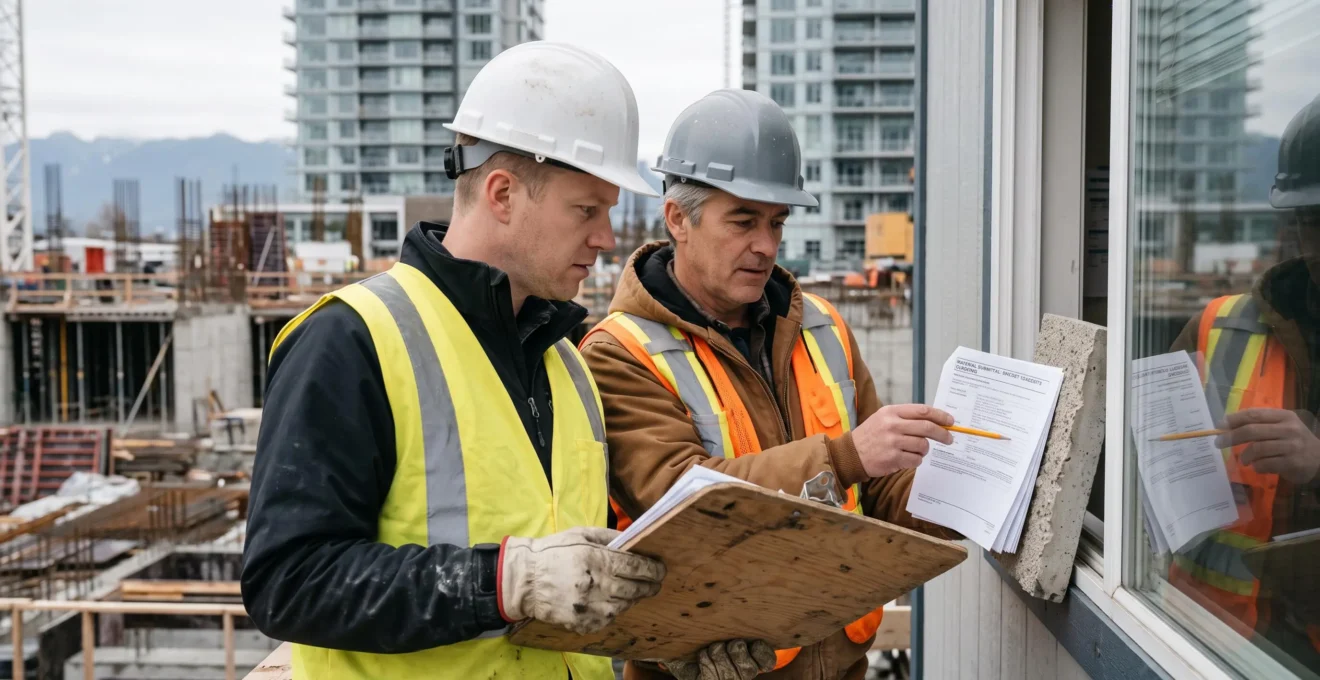
Moving into project management is not the only way to pursue better-paying work in Vancouver construction. Contractors also need people who can manage sustainability documentation, coordinate material submissions, track construction waste, support commissioning and identify compliance gaps before they become expensive to resolve.
For tradespeople and junior construction professionals, these responsibilities can create a path toward specialized positions such as LEED documentation coordinator, sustainability field coordinator, materials compliance specialist or commissioning support technician. None automatically requires taking responsibility for an entire construction project.
The opportunity depends on what a project actually requires. Vancouver’s municipal green building rules and voluntary LEED certification are different systems, although some practical skills transfer between them. A credential can strengthen an application, but demonstrable field experience and documented responsibility are often more useful talking points than a certificate alone. Higher compensation remains a possibility to investigate, not a guaranteed outcome.
LEED career opportunities in Vancouver: the essentials
- Target specialized documentation, materials compliance, waste tracking and commissioning support responsibilities rather than full project management.
- Build evidence of actual work performed on sustainability requirements, then choose LEED Green Associate or LEED AP based on the positions you want.
- Identify contractors through recent projects and relevant compliance activities, then approach hiring contacts with specific examples of your contribution.
- Why Do Vancouver Developers Still Ask for LEED Experience Even When Budgets Are Tight?
- How to Document LEED-Related Site Work in Vancouver So Employers Take It Seriously?
- LEED GA or LEED AP: Which Credential Helps More in Vancouver If You Have 2 Years of Site Experience?
- The Documentation Mistake That Can Get You Pulled Off a Vancouver LEED Project
- When Should You Pursue LEED Credentials in Vancouver to Catch Spring Project Starts?
- Why Do Vancouver CleanTech Teams Hire Differently Than SaaS Teams for the Same Skills?
- How to Build a Target List of 25 Contractors for Vancouver Renewable Projects in 1 Hour?
- How Do You Get Hired on Renewable Infrastructure Projects Near Vancouver Without Knowing Contractors?
Why Do Vancouver Developers Still Ask for LEED Experience Even When Budgets Are Tight?
Vancouver developers may continue valuing LEED-related experience during budget pressure because sustainability documentation can remain necessary even when discretionary spending is reduced. However, municipal green building compliance does not automatically require LEED certification. Candidates should distinguish mandatory regulatory work from voluntary certification before assuming that a particular sustainability position is protected from cuts.
The critical distinction is between a project’s approval obligations and its chosen environmental certification objectives. Vancouver regulates aspects of building energy performance, emissions and sustainability documentation through municipal policies and building requirements. These obligations can create work for coordinators who understand reporting, construction records and technical submissions.
The City of Vancouver‘s zero-emissions building requirements describe sustainability-related expectations for applicable projects. The Green Buildings Policy for Rezonings applies to new rezoning projects and includes submission requirements involving embodied carbon, resilience, commissioning commitments and energy system sub-metering.
Vancouver Building By-law 2025 took effect on September 15, 2025, with commissioning requirements for new Part 3 construction. The applicability of specific provisions still depends on the relevant project circumstances and submission pathway.
These requirements do not mean every Vancouver developer must obtain LEED certification. A developer might pursue a LEED rating independently, respond to an owner requirement or satisfy applicable municipal rules without undertaking LEED certification at all.
When interviewing, ask three questions:
- Is the project targeting an identified LEED certification level, following municipal green building requirements, or both?
- Which sustainability records must the construction team prepare and verify?
- Who owns material submissions, waste documentation, commissioning coordination and compliance tracking?
If budgets tighten, a contractor might combine several documentation responsibilities into one role. That is a plausible staffing scenario, not an established Vancouver-wide hiring pattern. The practical lesson is to demonstrate competence across related tasks without accepting undefined accountability for everything.
For example, someone who can organize product declarations, maintain a waste register and flag missing commissioning documentation offers broader operational usefulness than someone whose résumé merely states an interest in green construction.
This distinction helps assess a job’s stability and scope. It also determines which evidence of previous site work will be most persuasive when applying.
How to Document LEED-Related Site Work in Vancouver So Employers Take It Seriously?
Document LEED-related experience by identifying the project, the specific sustainability requirement, your personal responsibility and the records you produced. Employers can evaluate verified contributions more meaningfully than general claims about working on a LEED-certified building. Secure appropriate confirmation while the project team and supporting documents are still accessible.
Start by translating everyday construction activities into precise descriptions of compliance-related work. The objective is not to exaggerate your role. It is to connect an ordinary site task to its actual purpose within the project’s rating system or compliance framework.
For example, compare these résumé statements:
| Generic description | More useful description when verified |
|---|---|
| Managed construction waste | Maintained construction waste records and tracked diversion data against the project’s LEED waste management documentation requirements. |
| Checked material deliveries | Compared delivered product information with approved submittals and escalated missing sustainability declarations. |
| Helped with commissioning | Supported commissioning record collection and tracked outstanding documentation requested by the commissioning team. |
| Prepared site paperwork | Maintained dated registers of sustainability-related submissions, supporting records and outstanding corrections. |
The statements in the second column should only be used when they accurately describe completed work. Working on a LEED project does not establish that every employee personally contributed to LEED credit documentation.
For a concrete technical example, USGBC’s LEED v4.1 construction waste credit documentation distinguishes diverted materials from disposed waste, requires consistency in measurement units and addresses mixed recycling facility recovery rates. Waste records should follow the project’s applicable credit requirements rather than arbitrary diversion calculations.
Develop a personal experience register containing the project type, employer, applicable LEED version if known, assigned responsibilities, document categories and dates of involvement. Keep descriptions factual and distinguish records you prepared from those you merely reviewed or transmitted.
Ask the sustainability coordinator, LEED AP or supervisor for a short confirmation of your responsibilities before leaving the project. A signed role letter can establish participation without disclosing confidential project submissions.
Do not copy proprietary material schedules, client information, personal data or internal correspondence into an independent portfolio without authorization. Redacted samples and written descriptions of your work may be more appropriate.
Once this evidence exists, credential decisions become easier. You can judge whether an examination would add meaningful knowledge or simply repeat what your project experience already demonstrates.
LEED GA or LEED AP: Which Credential Helps More in Vancouver If You Have 2 Years of Site Experience?
For someone with two years of Vancouver site experience, LEED Green Associate is often a reasonable starting point when sustainability responsibilities have been limited. LEED AP with specialty becomes more relevant when targeting technical coordination or credit documentation roles. Two years of experience does not automatically determine eligibility or make either credential the better hiring choice.
LEED Green Associate establishes foundational knowledge of green building concepts and LEED processes. LEED AP with specialty requires deeper familiarity with the relevant rating system and its application to projects.
The USGBC‘s LEED AP with specialty credential requirements specify that candidates must hold a current LEED Green Associate credential or pass the Green Associate and specialty examinations together. LEED project participation is strongly recommended, but is not listed as a mandatory two-year eligibility requirement.
The best choice depends on intended responsibilities rather than years on site alone.
| Decision factor | LEED Green Associate | LEED AP with specialty |
|---|---|---|
| Career direction | Entry into sustainability-aware site and support roles. | More specialized LEED documentation and technical coordination responsibilities. |
| Two years of site experience | Useful practical foundation; direct LEED involvement is not essential to begin preparing. | Relevant project work helps connect advanced material to practice, although it is not a mandatory eligibility requirement. |
| Potential employer signal | Foundational LEED literacy. | Specialized knowledge of LEED processes and a chosen rating-system area. |
| Example target roles | Site documentation assistant, junior sustainability support, project administrator. | LEED coordinator, sustainability documentation specialist, green building compliance support. |
| Training commitment | Foundation examination and credential maintenance. | Additional specialty examination and more extensive continuing education obligations. |
| Best decision test | Choose when target postings emphasize basic LEED awareness and field coordination. | Consider when relevant postings specifically request specialty-level knowledge. |
These are career-positioning distinctions, not verified rankings of Vancouver hiring outcomes. Employers may prefer candidates with relevant documentation experience regardless of which credential they hold.
For construction-focused work, LEED AP Building Design + Construction is a logical specialty to investigate. However, the project’s actual rating system matters. LEED v4 and v4.1 remain relevant to understanding existing project documentation, while USGBC also identifies LEED v5 for applicable rating-system families.
Do not choose study materials solely around a familiar version number. Compare the current examination content with the versions appearing in the jobs and projects you want to pursue.
To avoid unnecessary credential spending, review a sample of relevant job postings across residential high-rise, institutional construction and commercial fit-out employers. Record whether they request Green Associate, LEED AP, equivalent experience or no credential at all.
Also separate pay expectations from credential value. The existence of a LEED designation does not establish a measurable local salary premium. Compare actual offers and responsibilities before attributing higher compensation to certification.
A credential should support the work you can already explain and the technical responsibilities you intend to accept. Accurate document control is one of the most important ways to demonstrate that capability.
The Documentation Mistake That Can Get You Pulled Off a Vancouver LEED Project
One serious documentation mistake on a LEED project is allowing material substitutions to proceed without checking their effect on sustainability submissions. Missing environmental product information, outdated approvals or incomplete substitution records can compromise evidence needed for particular credits. The consequences depend on the credit, project requirements and corrective options; removal from a project is not automatic.
Material substitution is common enough to deserve a deliberate control process. An approved product may become unavailable, a supplier may offer an alternative, or a trade may propose an equivalent material to maintain the construction schedule.
However, construction equivalence and LEED documentation equivalence are not necessarily the same thing. Two products may satisfy a technical installation specification while carrying different environmental declarations or other evidence relevant to a targeted credit.
Consider a hypothetical Vancouver commercial construction project pursuing a LEED materials credit. An originally reviewed interior product has supporting environmental information, but the installer proposes a replacement shortly before installation.
Hypothetical example: the replacement product with missing paperwork
A site coordinator records the substitute product as accepted for installation but does not flag that its required sustainability documentation remains outstanding. During credit compilation, the LEED team discovers that the replacement lacks evidence necessary for the planned contribution.
The team must then assess whether the product can be documented, whether alternative eligible material contributions are sufficient or whether the credit strategy must change. This scenario illustrates a documentation risk, not an actual Vancouver project incident or an automatic loss of certification.
Depending on the targeted credit, supporting evidence may involve an environmental product declaration, a health product declaration, another approved disclosure format or a product-specific compliance record. These documents are not interchangeable across every LEED credit.
The coordinator’s responsibility is to maintain traceability and escalate outstanding evidence, not independently approve every technical change. Product selection remains subject to the project’s contractual and professional approval structure.
A practical substitution register can include:
- Original product and proposed replacement.
- Relevant specification section and approval reference.
- Applicable sustainability documentation requirement.
- Status of supporting evidence and outstanding issues.
- Responsible reviewer, decision date and next action.
Update the register when a substitution is proposed, reviewed and resolved. Escalate unresolved environmental documentation to the designated sustainability or design contact before the records become difficult to recover.
This control also protects your professional credibility. A dated record demonstrates what was known, which issue was raised and who had approval authority.
The broader career advantage is becoming dependable with compliance-sensitive information while keeping responsibility clearly defined. The next challenge is making those skills visible before hiring decisions are made.
When Should You Pursue LEED Credentials in Vancouver to Catch Spring Project Starts?
To target spring construction opportunities in Vancouver, prepare your LEED credentials and experience portfolio before the positions you want are advertised. A late-autumn or winter preparation schedule can be practical, but spring is not a guaranteed hiring peak for every contractor. Follow real project and recruitment signals rather than relying on a fixed seasonal assumption.
Start with the likely responsibilities of your target job. If postings repeatedly require LEED terminology, documentation familiarity or commissioning coordination, give yourself sufficient time to study, prepare examples and complete any relevant examination.
Working backward from an intended spring start can organize the process:
| Planning period | Recommended activity | Evidence to produce |
|---|---|---|
| Autumn | Review target roles and compare credential expectations. | Shortlist of employers and a record of job requirements. |
| Early winter | Choose appropriate credential preparation and collect authorized project evidence. | Study plan and verified experience inventory. |
| Late winter | Complete feasible examination milestones and contact relevant employers. | Updated résumé and targeted applications. |
| Spring | Follow project opportunities and interview for roles matching demonstrated experience. | Interview notes and an updated opportunity pipeline. |
This sequence is a planning example, not a statement that Vancouver contractors consistently award projects or finalize staffing at the same point every year.
Look for evidence of upcoming work. Development applications can indicate possible future construction, issued permits can identify authorized work, and contractor advertisements may reveal immediate or anticipated staffing needs.
Check the difference between a development proposal, a permit and an active construction site. These represent different project stages and cannot be treated as interchangeable hiring signals.
For credential scheduling, check current examination availability and preparation requirements before committing to application deadlines. Do not advertise a credential as completed until it has actually been earned.
If spring recruitment activity appears limited, preserve flexibility. Building upgrades, fit-outs, ongoing institutional work and commissioning-related assignments may follow different schedules from major new-build mobilization.
The same preparation can support opportunities beyond conventional contractors, particularly among firms connecting construction experience with building performance and clean technology.
Why Do Vancouver CleanTech Teams Hire Differently Than SaaS Teams for the Same Skills?
Construction-adjacent CleanTech companies may assess candidates differently from software-as-a-service employers because their work can involve physical equipment, building performance and regulated project environments. Site experience, commissioning knowledge and compliance records may therefore carry particular value. However, hiring criteria vary by company and role, so candidates should adapt their evidence rather than assume every CleanTech employer prioritizes the same skills.
A software company recruiting a general operations coordinator might emphasize software workflows, customer support, process automation or the ability to scale an internal service. A building-focused CleanTech employer may instead need someone who understands contractor schedules, equipment installations, commissioning milestones and technical recordkeeping.
These differences become visible when describing the same experience.
| Experience | Construction-adjacent CleanTech emphasis | SaaS-oriented emphasis |
|---|---|---|
| Document tracking | Traceability of technical submittals and compliance evidence. | Accuracy, workflow organization and version control. |
| Site coordination | Understanding installation dependencies and contractor communication. | Cross-functional coordination and issue resolution. |
| Waste and material reporting | Knowledge of physical resource tracking and project documentation. | Data quality, reporting consistency and process discipline. |
| Commissioning assistance | Familiarity with equipment verification and project close-out. | Testing workflows and structured issue tracking where transferable. |
For someone with two years of site experience, the most credible CleanTech positioning may be field-informed technical coordination, rather than presenting themselves as a clean energy engineer or sustainability strategist without the necessary training.
Potential directions include building performance support, energy retrofit coordination, equipment deployment administration, technical customer implementation and commissioning documentation support.
Each requires its own assessment. Some positions involve formal engineering qualifications, specialized technical training or substantial experience. LEED knowledge does not replace those requirements.
When comparing a general contractor, an energy-focused developer and a CleanTech supplier, rewrite the résumé summary to emphasize the contribution each employer needs. Preserve the same underlying facts and documented responsibilities.
This wider employer pool creates more possibilities for targeted outreach. The next task is identifying firms whose real projects make those skills useful.
How to Build a Target List of 25 Contractors for Vancouver Renewable Projects in 1 Hour?
Build a 25-contractor prospect list by starting with public project evidence rather than a generic business directory. Identify recent Vancouver construction activity, research the companies involved and prioritize those with relevant sustainability or energy-related work. One hour is a useful research sprint, but completing 25 fully verified prospects in that time is not guaranteed.
The City of Vancouver’s issued building permits dataset provides a practical starting point. Its records include information such as issue dates, work types, project descriptions, estimated construction values and contractor details when known.
Building permits establish issuance, not current project activity. Contractor details may be missing or outdated, and permit records do not independently establish LEED certification or renewable infrastructure involvement.
Use the dataset to generate research leads. Then verify each company’s relevant project experience through its published work, project owner announcements, legitimate tender information or publicly available technical descriptions.
For a balanced prospecting exercise, divide the target list into three research groups:
- Major general contractors: 8 prospects with relevant construction portfolios and identifiable project teams.
- Mid-sized contractors: 9 prospects where a focused technical or sustainability-support role may be worth investigating.
- Specialized subtrades and technical contractors: 8 prospects involved in mechanical systems, commissioning, building upgrades or related work.
This 8–9–8 allocation is an illustrative prospecting target, not a statistical recommendation based on measured hiring success. It prevents a list composed exclusively of familiar large contractors.
Five actions to build and qualify your contractor list
- Identify recent projects: filter relevant municipal permit records and export a working table containing project descriptions, dates and available company names.
- Check sustainability relevance: review publicly available project information and add a field stating which energy, commissioning or LEED-related activity is actually documented.
- Balance your prospects: categorize candidates as major contractors, mid-sized firms or specialized subtrades and fill your 25-row research target.
- Locate appropriate contacts: record a verified public recruitment channel, project office or relevant professional contact for each usable prospect.
- Prioritize outreach: assign each entry an evidence-based priority and a next action, producing a usable contact tracker rather than an unverified name collection.
A spreadsheet with columns for company, project, project stage, relevant sustainability activity, supporting evidence, contact route and follow-up status is sufficient. Avoid including invented contacts or treating uncertain project information as confirmed.
BC Hydro-related contractor resources, LEED project information and municipal tender publications may provide additional research avenues where relevant. Their usefulness depends on the specific service category and what each resource actually documents.
Importantly, a firm involved in energy-related building upgrades is not necessarily a renewable infrastructure contractor. Separate building performance, electrification, renewable generation and broader infrastructure work when tagging your prospects.
Once the list contains legitimate projects and contact routes, recruitment becomes a question of connecting your specific documentation experience to a potential employer’s actual needs.
Key takeaways before contacting contractors
- A project record is a prospecting lead, not proof of an active vacancy or LEED certification.
- Use verified project responsibilities to explain what you can contribute without claiming project management authority.
- Approach contractors and specialist partners with a specific project connection and a clear request for an appropriate recruitment conversation.
How Do You Get Hired on Renewable Infrastructure Projects Near Vancouver Without Knowing Contractors?
You can pursue renewable infrastructure and energy-related construction opportunities near Vancouver without existing contractor relationships by combining targeted project research, verified site experience and appropriate professional outreach. Start with companies whose projects match your skills, then explain how your documentation, coordination or commissioning experience could transfer. Confirm qualification and site-access requirements before pursuing unfamiliar infrastructure roles.
Begin with your prioritized contractor tracker. Look for a public hiring contact, project recruitment channel or relevant sustainability or construction coordination contact. Refer to a verified project rather than approaching the company with a generic request to work in green construction.
A useful message connects three facts: the employer’s documented activity, your actual experience and a specific type of contribution you could make.
For example, a candidate who has maintained construction waste documentation might explain that they have experience reconciling site records and escalating missing supporting information. They can ask whether the contractor recruits site documentation or sustainability support personnel.
Avoid claiming knowledge of confidential staffing shortages or assuming the company needs LEED assistance merely because a building permit exists.
Also research specialist relationships around the project. Commissioning firms, mechanical contractors, energy modelling consultants, material suppliers and waste management providers may understand the technical skills associated with particular construction assignments.
These contacts can sometimes provide useful information about the contracting environment or appropriate application routes. They should not be treated as guaranteed access to unpublished vacancies, and confidential staffing information should not be requested.
For applicants without renewable infrastructure experience, the key is to identify genuinely transferable tasks. Construction waste tracking, controlled material submissions and document registers may demonstrate disciplined recordkeeping. Commissioning support may be particularly relevant where prior responsibilities involved equipment documentation or issue tracking.
Nevertheless, LEED experience alone does not establish competence in renewable generation, electrical installation, utility infrastructure or specialized energy systems. Technical qualifications, trade certification, safety training and employer-specific requirements must be evaluated separately.
During an introductory conversation, ask whether the position is primarily field coordination, technical documentation, commissioning support or full project management. Request clarity on supervisory authority, project reporting responsibilities and the knowledge needed to work safely.
For salary discussions, compare the complete offer: compensation, hours, overtime arrangements, travel, site conditions, benefits, progression and accountability. A specialized title does not necessarily mean better earnings, especially when additional responsibilities are substantial.
Track outreach results and adjust your approach based on genuine responses. If employers consistently identify a missing technical skill, that gap provides a clearer training target than adding credentials without reference to actual job requirements.
Choose five well-researched employers from your target list, prepare a tailored résumé for each and make an initial contact through an appropriate channel. The objective is to secure a conversation about suitable specialist roles while retaining the boundaries that matter to you: stronger career prospects without taking on full project management.
Can you work in a LEED documentation role without becoming a project manager?
Yes. Documentation coordination, materials recordkeeping, construction waste tracking and commissioning support can be assigned as specialist responsibilities. Job titles alone are insufficient to define the role, however. Confirm whether a position includes budget ownership, subcontractor supervision, schedule accountability or other duties normally associated with project management.
Is LEED certification required on every new building in Vancouver?
No. Vancouver has municipal green building and building by-law requirements that may apply depending on the project. These should not be confused with an automatic obligation to pursue LEED certification. Examine the building’s approval pathway and any owner-imposed certification targets to determine which documentation requirements are relevant.
Does a LEED AP credential guarantee higher pay than LEED Green Associate?
No. LEED AP represents more specialized credential knowledge, but the available source information does not establish a guaranteed Vancouver salary premium. Actual compensation depends on the employer, responsibilities, relevant experience, technical qualifications and employment terms. Compare offers for comparable positions rather than assuming that the credential alone determines pay.
Can experience on a non-LEED construction project help with a sustainability career?
Yes. Work involving product submittals, commissioning support, environmental documentation, construction waste records or quality control may demonstrate transferable abilities. Describe the original project accurately. Do not represent municipal green building compliance or ordinary construction tasks as direct LEED credit participation unless that connection is verifiable.
What should you do if a former employer cannot provide LEED participation records?
Use legitimate evidence that remains available, such as an authorized employment reference, a role description or a supervisor’s factual confirmation. Explain the specific responsibilities you performed without suggesting that unavailable documentation exists. Avoid distributing confidential project records or overstating your contribution to certification.