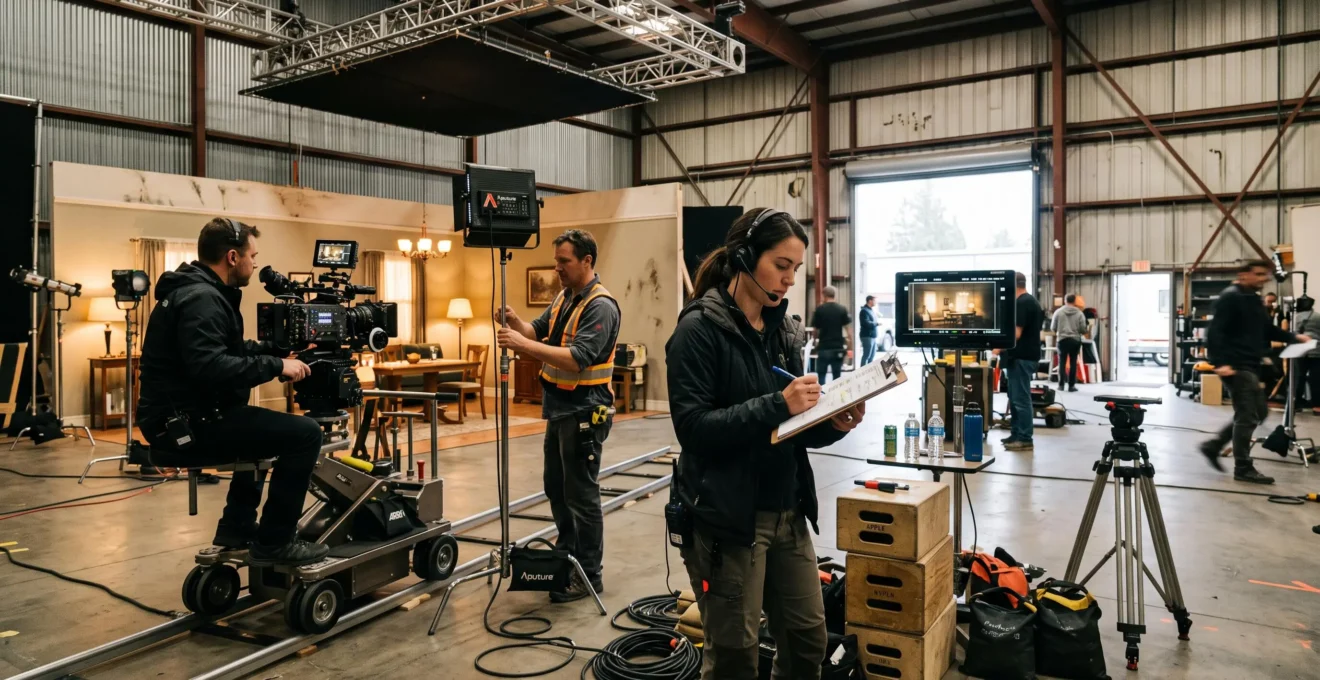
Vancouver film production studios do not evaluate every applicant against the same hiring checklist. A production coordinator staffing a shoot needs evidence of dependable set experience, accurate credits and immediate availability. A visual effects supervisor reviewing an artist needs proof of specific technical contributions. A studio operations manager filling a permanent position may prioritize continuity, communication and experience with established production workflows.
Before a callback, the practical questions are straightforward: Can this applicant perform the required work, can the experience be verified, and does the application match an actual staffing need? Even an excellent candidate may receive no response when a project is between hiring phases.
Understanding the difference between production crews, permanent studio employees and VFX teams changes how applicants should present their work. It also helps candidates assess income stability, contract conditions and whether a particular Vancouver studio opportunity is worth pursuing.
What matters before a Vancouver studio callback
- Production timing matters: an active project does not necessarily have an open position, and hiring pauses have no universal duration.
- Verifiable experience wins: use accurate credits, clear responsibilities and discipline-specific evidence instead of inflated titles or presentation-heavy reels.
- Contract fit matters: distinguish staff employment from project bookings, check applicable agreements and prepare an outreach strategy matched to the hiring department.
- Why Do Vancouver Film Studios Hire Fast, Then Pause Hiring for 4 Weeks?
- How to Present Your Credits on a Vancouver Studio Resume Without Looking Inflated?
- Staff Studio Role or Freelance Production: Which Vancouver Option Protects Your Income Better?
- The Overtime Assumption That Creates Conflicts on Vancouver Studio Contracts
- In What Order Should You Reach Out to Vancouver Studios to Get on Their Radar?
- Agency, Studio, or In-House: Which Vancouver Digital Media Job Gives You Steadier Hours?
- Why Do Vancouver VFX Teams Reject Reels That Look « Good » on Instagram?
- How Do Vancouver VFX Artists Make Their Reel Look « Studio-Ready » in 60 Seconds?
Why Do Vancouver Film Studios Hire Fast, Then Pause Hiring for 4 Weeks?
Vancouver production hiring can accelerate when a project enters preparation or shooting and slow once its immediate staffing requirements are met. A four-week silence does not establish a standard industry hiring cycle. The pause may reflect completed crew staffing, changing production schedules or an unconfirmed next project rather than a judgment about an individual application.
Film and television production uses temporary concentrations of labour. Different departments need different crew sizes during preparation, principal photography, wrap and post-production. Camera, grip, lighting and art departments can face intense staffing demand during preparation and shooting, while editorial and VFX work follow different production schedules.
Budget approvals, financing arrangements, production commitments and applicable incentives can influence when a show proceeds. However, candidates should not interpret a production announcement or anticipated tax credit as confirmation of an approved hiring budget.
Creative BC publishes Creative BC’s In Production list, a weekly resource identifying productions shooting or preparing to shoot in British Columbia. The published information can help applicants identify activity, but it is not a recruitment calendar and may omit certain productions, including animation and documentary projects.
A candidate should use this information as an initial signal, then look for evidence of actual departmental demand.
- Possible pipeline pause: a production remains active, but no relevant openings are advertised and departmental staffing appears complete.
- Possible application mismatch: a vacancy remains open while the applicant’s documented experience does not meet its essential requirements.
- Possible recruitment closure: the vacancy disappears or the employer confirms that staffing is complete.
- Possible new intake: relevant openings appear, a recruiter requests updated availability, or a previously contacted coordinator resumes communication.
These signals are diagnostic rather than definitive. A closed advertisement does not reveal whether a position was filled internally, offered through an established crew list or cancelled.
For follow-up, a practical approach is to wait approximately one to two weeks after a relevant application before sending a concise availability update, unless the employer has specified another timeline. This is a suggested communication practice, not a documented Vancouver hiring rule.
If there is no response, record the contact and revisit the opportunity when credible new production or vacancy information appears. Repeated messages without changed availability, qualifications or project context rarely add useful information.
The next factor is whether the studio can quickly understand and trust the experience shown on the resume.
How to Present Your Credits on a Vancouver Studio Resume Without Looking Inflated?
A Vancouver studio resume should identify the actual job performed, the production or project, the relevant department and the scope of responsibility. Use recognizable crew classifications where appropriate, but do not substitute a more senior title for work performed at an assistant or trainee level. Every significant credit should be explainable and supportable by a supervisor.
Film production credits are different from general creative portfolio descriptions. A resume that calls every contribution a leadership role makes it difficult for a coordinator to identify the applicant’s actual experience.
For example, someone who worked as a production assistant should not claim to have been a production coordinator simply because they helped maintain schedules or handled departmental communications. Those tasks may be relevant experience, but they do not automatically establish responsibility for the coordinator’s entire function.
A useful credit entry includes:
- Production identification: project title and production type, subject to any confidentiality obligations.
- Actual position: the title used during the engagement, with the relevant department.
- Employment scope: dates, approximate working days or episodes when accurately documented and useful.
- Specific duties: equipment, workflow stages, production tasks or deliverables personally completed.
- Verification context: a supervisor or production contact able to confirm the contribution, when permission has been obtained.
British Columbia production roles can be governed by different agreements and classifications, including work covered by IATSE Local 891, DGC BC or ACFC arrangements. Applicants should use terminology appropriate to the production and job rather than assuming those organizations classify every studio role in the same way.
IMDb listings, public production records and available union records may provide useful context for checking credits. They are not comprehensive verification systems, and their existence does not establish that every employer routinely consults them. The strongest verification remains a consistent description of work that an appropriate production contact can confirm.
Applicants with limited professional credits can still demonstrate relevant capability. Student productions, independent shorts and self-directed projects become stronger evidence when the resume specifies the workflow and the individual’s responsibilities.
For example, a candidate might describe organizing camera reports, preparing footage for editorial handoff or maintaining documented asset versions on a short film. Such descriptions are more informative than calling the same experience a full production management role.
If a project has not been released, label it accurately as unreleased or in production where disclosure is authorized. If a formal screen credit remains pending, separate that status from the work actually performed. Do not reveal confidential projects merely to strengthen an application.
Exaggerated credits can damage credibility when discrepancies emerge, but an industry-wide blacklisting consequence cannot be assumed. The immediate practical risk is that a hiring decision rests on information the applicant cannot substantiate.
Once the experience is clear, the next decision is whether the available employment structure provides acceptable financial stability.
Staff Studio Role or Freelance Production: Which Vancouver Option Protects Your Income Better?
A staff studio position may offer more predictable earnings when employment and scheduled hours remain consistent. Freelance production work can produce competitive earnings during booked periods but requires planning for gaps between contracts. Neither arrangement automatically provides better income protection. The answer depends on actual workdays, contract terms, benefits, insurable employment and the reliability of future bookings.
The first distinction is between being employed continuously by an organization and working on engagements tied to individual productions. A staff title does not guarantee long-term employment, while a freelancer with established booking relationships may experience relatively steady demand.
The table identifies the questions that matter when comparing offers in British Columbia.
| Criterion | Staff studio position | Freelance production engagement |
|---|---|---|
| Payment structure | Often recurring wages or salary under an ongoing employment arrangement | Compensation tied to booked days, weeks or a defined engagement |
| Income gaps | Usually fewer between individual projects while employment continues | Potential gaps between confirmed bookings |
| Benefits | Depend on the employer’s plan and eligibility conditions | Depend on employment classification, applicable agreements and benefit arrangements |
| Overtime | Depends on legal coverage, duties and contract conditions | May be governed by production-specific collective agreements or applicable law |
| Employment Insurance | Depends on insurable employment and eligibility requirements | Also depends on insurable employment and eligibility; freelance status alone is insufficient |
| Principal exposure | Dependence on the employer’s ongoing operations and staffing decisions | Dependence on booking continuity and availability of suitable work |
For Employment Insurance, the Government of Canada identifies a standard range of 420 to 700 required insurable hours during the qualifying period, depending on the applicable regional unemployment rate and individual circumstances. The ordinary qualifying period is generally the shorter of the preceding 52 weeks or the period since an earlier benefit period began.
These are accumulated hours during the qualifying period, not weekly requirements. Applicants should consult the Government of Canada’s EI eligibility requirements and verify their applicable economic region before assuming benefits will cover a gap between productions.
420–700 hours
The standard range of insurable employment hours required for regular EI eligibility, subject to regional unemployment rates and individual circumstances. Meeting an hours threshold alone does not guarantee benefits.
Government of Canada, regular Employment Insurance eligibility guidance.
For covered union production work, rates and employment conditions must be checked against the appropriate collective agreement and classification. A rate associated with one production category should not be treated as the standard for all Vancouver studios.
To compare annual income, calculate paid days using actual records rather than projected uninterrupted bookings. A straightforward evaluation is:
Annual work earnings = total paid days × applicable daily compensation, adjusted for separately payable overtime, contractual premiums and other documented compensation. If rates vary, calculate each engagement separately.
Then compare net income after relevant employment-related expenses and taxes, accounting separately for benefits and realistic periods without work. For a staff position, compare the actual employment offer rather than a presumed full year of guaranteed wages.
Hypothetical comparison: two different risk profiles
Candidate A supports dependents and has substantial fixed monthly obligations but few established production contacts. Candidate B has flexible expenses and two department contacts who have provided repeat bookings. Neither has a guaranteed future workload.
Candidate A may reasonably prioritize a suitable continuing staff position. Candidate B may prefer production bookings if historical paid days support that decision. Both should compare documented earnings and the risk of an extended work gap rather than relying only on advertised pay rates.
The right choice also depends on career maturity. New entrants without confirmed bookings should be especially careful about calculating income using an ideal production schedule. Experienced crew should still avoid treating expected future calls as secured contracts.
Pay predictability is only part of financial security; misunderstandings about overtime can materially change the value of either arrangement.
The Overtime Assumption That Creates Conflicts on Vancouver Studio Contracts
The most consequential overtime assumption is that a salary removes overtime entitlement or that a flat day rate authorizes unlimited hours. Neither conclusion follows from the payment label alone. In British Columbia, the applicable rules depend on the actual employment relationship, duties, production type, collective-agreement coverage and relevant employment standards.
Unionized film production employees and non-union studio personnel may be working under substantially different frameworks. A contractual term applicable to a covered lighting technician cannot automatically be transferred to a non-union post-production employee or an independent contractor.
The Government of British Columbia explains in its guidance on unionized workplaces that collective-agreement provisions can govern matters including hours and overtime where applicable statutory conditions are satisfied. Where an agreement does not cover a relevant subject or does not meet the required standard, statutory provisions may apply instead.
Disputes over collective-agreement entitlements generally follow the applicable grievance procedures. This distinction matters because a worker should identify the proper process before escalating a payroll disagreement.
For production roles covered by IATSE Local 891, the union publishes contractual resources associated with the British Columbia Council of Film Unions framework. Its 2025–2028 agreement took effect on April 1, 2025, but applicable conditions still depend on the production and classification.
Before accepting an engagement, inspect the clauses governing:
- Rate definition: whether compensation is hourly, daily, weekly or salaried, and what work the rate covers.
- Overtime calculation: when additional compensation becomes payable under the applicable framework.
- Turnaround: any contractual minimum rest interval between work periods.
- Meal periods: scheduling obligations and any applicable penalties or premiums.
- Split or extended workdays: how unusual scheduling arrangements are defined and compensated.
- Remote work: whether approved editing, revisions, meetings and related tasks count toward recorded working time.
Do not assume that every contract includes the same meal penalties or turnaround provisions. Likewise, not every salaried employee is necessarily exempt from overtime. The actual agreement and relevant statutory classification must be established first.
A ten-minute pre-signing review can begin by locating the compensation clause, identifying the governing agreement, checking the hours and overtime provisions, and asking payroll or the hiring contact to clarify unresolved terms in writing.
If reported hours do not match payment records, preserve the call sheet, authorized time reports, relevant messages and pay documentation. Raise the discrepancy factually, identifying the dates and specific hours concerned.
For covered union work, contact the appropriate union representative about the agreement’s procedure. For other employment, determine which BC employment standards and dispute mechanisms apply.
There is no basis for assuming that a good-faith pay inquiry automatically damages future hiring prospects. Clear records and timely communication are more useful than either confrontation or silence.
A suitable contract should be understood before outreach converts into an offer, which makes targeted contact strategy the next priority.
In What Order Should You Reach Out to Vancouver Studios to Get on Their Radar?
Start with departments that match your verified experience and have credible indications of staffing activity. Next, investigate productions or studios whose upcoming work fits your specialty. Use public vacancies, authorized department contacts, established crew channels and relevant career portals according to the employer’s process. Prioritize the clearest hiring connection, not the largest possible mailing list.
A generic application sent to every production company gives recipients little reason to associate the applicant with a particular staffing need. Targeted outreach should make that connection obvious.
For set-based roles, a production or department contact may be more relevant than a general recruitment address. For permanent studio positions and VFX vacancies, a designated recruiting team or official application portal may be the appropriate first channel.
Department recommendations and availability lists are useful mechanisms, but they should not be presented as universal replacements for formal recruitment. Some employers expressly require applications through their recruitment systems.
An effective outreach sequence is:
- Identify your department: define the precise role supported by your credits, rather than contacting unrelated departments.
- Check relevant activity: review credible production information, official vacancies and applicable department-specific opportunities.
- Find the appropriate channel: choose an authorized coordinator, recruiter, crew availability system or studio portal.
- Send a concise, forwardable introduction: state the role sought, relevant experience, availability and a direct link to supporting work.
- Record the outcome: track contacts, stated requirements, application dates and any legitimate reason to follow up.
A useful message could identify the candidate as an available lighting assistant with documented experience on independent productions, specify relevant tasks and provide a current resume. It should avoid claiming familiarity with a company’s staffing situation without evidence.
Mass-blasting generic messages, approaching several employees simultaneously about the same vacancy or repeatedly submitting unrelated reels can make application handling more difficult. Use one appropriate route initially and follow the employer’s instructions.
Five actions to build a studio-ready outreach file
- Choose one target role. Produce a one-line position statement supported by your experience.
- Verify three relevant credits or projects. Produce a resume section listing actual duties, dates and permissible references.
- Identify suitable production activity or openings. Produce a shortlist with the originating information and its date.
- Prepare one tailored application package. Produce a concise introduction, current resume and relevant portfolio or reel link.
- Create a follow-up log. Record the contact route, submission date, response status and next justified action.
The aim is not simply to collect names. An operationally useful contact can understand which department should consider the applicant, what the candidate has actually done and when the candidate is available.
After a first short booking, reliability becomes more concrete: show up prepared, follow reporting procedures, communicate changes promptly and deliver assigned work. A positive supervisor relationship may support later consideration, although it cannot guarantee another engagement.
Before investing fully in film production outreach, candidates should also compare how adjacent digital media workplaces handle schedules and career development.
Agency, Studio, or In-House: Which Vancouver Digital Media Job Gives You Steadier Hours?
In-house digital media employment may provide relatively consistent weekly scheduling, while agency workloads often fluctuate around client deadlines and production studios can experience intensive project phases. These are patterns to investigate, not guarantees. The steadier option is the employer whose documented workload, staffing arrangements and working-time expectations best match the candidate’s needs.
The phrase « studio job » covers several distinct operating models. A production company staffing a temporary shoot works differently from a permanent animation department or an established post-production team serving multiple clients.
Similarly, a digital agency can offer ongoing employment while managing significant workload spikes. An in-house marketing team may follow a regular calendar but still face demanding launch periods.
| Factor | Agency | Production studio | In-house team |
|---|---|---|---|
| Primary workload driver | Client briefs, revisions and campaign deadlines | Production stages, deliveries and confirmed project demand | Employer priorities, launches and recurring content needs |
| Potential workload variation | Concentrated deadlines and overlapping client demands | Production peaks and possible gaps, depending on staffing model | Recurring schedules with possible peak campaign periods |
| Career exposure | Multiple clients and formats | Specialized production pipelines and departments | Deeper familiarity with one organization’s content operations |
| Main stability question | How are competing client demands staffed? | Is employment continuous or tied to a specific production? | How predictable are the employer’s resources and priorities? |
To assess actual working-hour stability, ask about normal scheduling, the frequency of extended work periods, how additional work is recorded and what happens between assignments. A salaried position should not be presumed to provide paid or unpaid overtime solely because of its title.
Union-covered production work may offer contractually defined conditions for particular scheduling situations. That protection should be assessed against the applicable agreement, not generalized to all studio environments.
Career mobility matters alongside hours. An agency producing entertainment campaigns may help a candidate develop editorial, compositing or client-delivery skills relevant to certain studio jobs. An in-house team handling professionally produced video may provide experience with production coordination and asset management.
However, these pathways do not automatically establish competence in a specialized VFX pipeline or on-set department. Applicants planning a later transition should deliberately acquire evidence of the specific tasks performed in their desired studio role.
A practical self-assessment asks four questions: How predictable must weekly hours be? How much income variation can be tolerated? What overtime and time-off arrangements are acceptable? Which environment produces the strongest evidence for the next desired position?
For candidates pursuing VFX specifically, the next hiring barrier is usually not the workplace category but whether the reel proves specialist capability.
Why Do Vancouver VFX Teams Reject Reels That Look « Good » on Instagram?
A visually attractive social media reel can fail a studio review because it does not establish what the artist personally contributed. VFX hiring assessments need discipline-specific evidence: compositing integration, lighting decisions, simulation behaviour or another relevant technical result. Compressed presentation, dramatic grading and engagement metrics cannot substitute for a credible shot breakdown and inspectable work.
Social media rewards immediate visual impact. A VFX production workflow requires repeatable technical decisions, understandable contributions and work that can withstand detailed review. Those expectations overlap, but they are not interchangeable.
A dramatic final composite may involve tracking, roto, paint, lighting, FX, look development and compositing completed by different artists. Without attribution, the final image does not explain which capability belongs to the applicant.
Common reel weaknesses include:
- Unclear ownership: collaborative shots presented without a statement of the applicant’s specific tasks.
- Excessive finishing: colour treatment or rapid editing that makes it difficult to evaluate the actual work.
- Irrelevant material: unrelated motion graphics occupying much of a reel submitted for a dedicated compositing position.
- Software-only descriptions: naming applications without explaining the operations, decisions or deliverables completed.
- Insufficient technical visibility: no useful breakdown, reference or detail view for evaluating difficult parts of the work.
A reel for a compositing role should make it possible to evaluate elements such as keying, edge treatment, tracking and integration. A lighting reel needs enough information to assess lighting choices and the relationship between the rendered result and scene requirements.
Full-resolution viewing can expose problems concealed by a small, heavily compressed version. Applicants should inspect their own footage on a suitable display and verify that material remains coherent without relying on music, fast cuts or visual effects added solely for presentation.
Recruiters and supervisors may need to evaluate many submissions, making clear packaging valuable. However, there is no established universal rule that every Vancouver VFX reel receives less than a minute of attention. Artists should design for a rapid initial assessment while ensuring the material supports closer inspection when requested.
Instagram engagement can demonstrate public interest in creative work, but likes and follower counts are not technical evidence of studio readiness. A small number of well-documented, role-appropriate shots can communicate more to a specialist reviewer than a long montage of visually striking work with uncertain ownership.
Before submitting, mute the presentation, inspect the strongest shots at the highest legitimate quality available and ask whether each shows a task relevant to the advertised position. Confirm that the breakdown accurately credits collaborators and that every included shot may legally be shown.
The remaining challenge is arranging that evidence so a recruiter or supervisor can understand it almost immediately.
Key takeaways before preparing your final reel
- Choose material for the specific vacancy and discipline rather than using one general montage for every application.
- Make the applicant’s contribution visible and confirm that footage can be shared under relevant permissions.
- Design the opening to communicate technical strength quickly, while leaving enough detail for a closer review.
How Do Vancouver VFX Artists Make Their Reel Look « Studio-Ready » in 60 Seconds?
A studio-ready 60-second VFX reel should begin with the applicant’s strongest relevant shot, identify personal contributions clearly and show enough technical evidence to support a hiring decision. Around one minute is a useful editing target, not a universal studio requirement. Discipline-specific breakdowns, honest credits, authorized footage and simple navigation matter more than reaching an exact duration.
The reel should answer three questions without forcing the reviewer to search: What position is this artist applying for? Which work did the artist personally complete? Does that work demonstrate the technical requirements of the role?
A suggested one-minute structure is to open immediately with the strongest shot, use the middle to establish consistent capability through additional relevant work, and close before weaker material dilutes the impression. A compact identification slate and accessible breakdown information should make contributions unambiguous.
For a compositor, useful breakdowns may reveal original plates, matte work, tracking, cleanup and final integration. The selected examples should demonstrate judgment, not merely the existence of a finished image.
For lighting artists, breakdowns can show the relationship between scene assets, lighting passes and the final rendered result. FX artists may need to demonstrate simulation behaviour, control and consistency across a sequence. A generalist should select a coherent group of capabilities rather than presenting unrelated disciplines with no identifiable strength.
Professional plates used with permission, properly credited team projects and well-documented independent work can all support a portfolio. Student or course assignments should be labelled accurately. A group project must not be represented as entirely individual work.
Vancouver applicants should use the submission route requested by the employer. That may be an official career portal, a recruiting contact or an authorized referral channel. A referral can help a reel reach an appropriate reviewer, but it does not guarantee immediate examination or a callback.
For practical handling, the reel and its supporting page should have clear identification, a functioning accessible link, discipline-specific descriptions and consistent filenames. If the work is password protected, provide the necessary access through the permitted recruitment channel.
A concise breakdown page can identify each shot, the applicant’s role, personally completed tasks, relevant tools and authorized project credits. This gives a recruiter enough information to forward the material to a technical reviewer without composing an explanation on the artist’s behalf.
Before submission, check playback, remove broken or inaccessible links, confirm that the portfolio works without specialized permissions beyond those supplied, and compare the first few shots against the advertised role’s responsibilities.
Choose one relevant Vancouver studio vacancy, prepare a role-specific reel and breakdown page, then submit through its authorized recruitment channel. Keep a record of the application so any later follow-up adds useful information rather than repeating the original submission.
Can someone get a Vancouver film studio job without professional film credits?
It is possible to pursue suitable entry-level and junior opportunities using relevant training, independent projects and documented practical skills. The application should accurately identify the work performed and match the vacancy’s requirements. Some production classifications, union opportunities and specialist studio roles have additional eligibility or experience conditions that applicants must verify.
Does appearing on a BC production list mean a film studio is hiring?
No. Creative BC’s production listing identifies certain productions shooting or preparing to shoot in British Columbia. It does not establish open positions, recruitment dates or the completeness of departmental staffing. Candidates should independently confirm vacancies through legitimate recruiting channels.
Can a Vancouver film worker receive Employment Insurance between productions?
Potentially, if the worker meets the applicable federal eligibility requirements. These include qualifying insurable employment, sufficient accumulated insurable hours and other conditions concerning loss of work and availability for employment. A completed production contract does not, by itself, guarantee eligibility.
Should applicants include unfinished or unreleased productions in their portfolios?
Only when disclosure is authorized. A resume may be able to describe permissible work experience without revealing confidential production details. A public reel should exclude unreleased or protected footage unless the applicant has the necessary permission. Credits and project status must also be represented accurately.
Should candidates apply to Vancouver film crews and VFX studios with the same resume?
Usually not without adaptation. Set-based production applications should emphasize relevant crew credits, departmental tasks, availability and operational reliability. VFX applications generally need discipline-specific examples, clearly attributed shots and suitable technical breakdowns. Both should remain consistent with the candidate’s verified work history.